
Amboseli
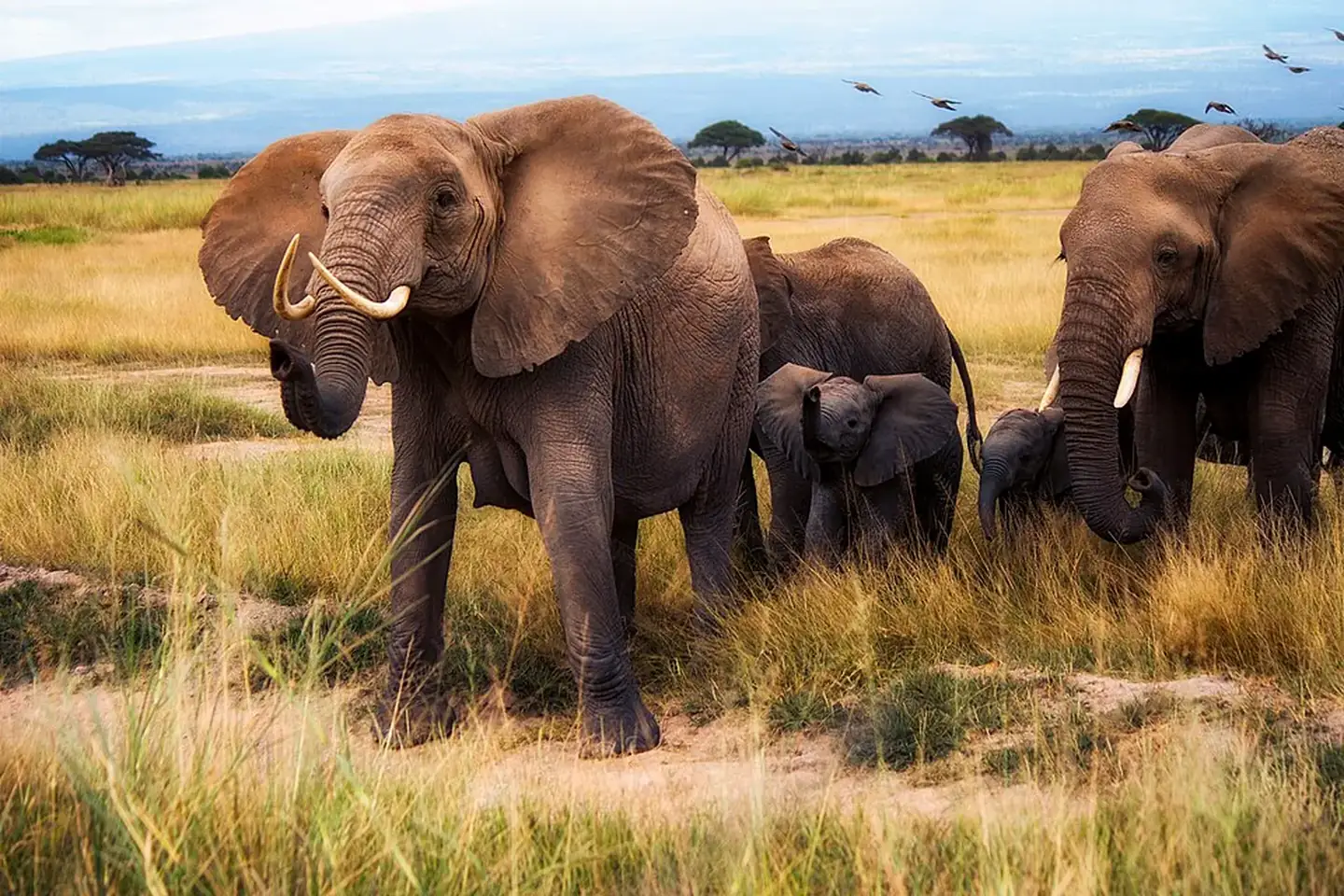
Amboseli is known for elephant herds, wetlands and views toward Kilimanjaro across the Tanzanian border.
Photo: Ray in Manila, CC BY 2.0
Place overview
Understanding Amboseli
The park’s springs support marshes within a dry landscape. Wildlife concentrates around these water sources, while dust and open plains create distinctive photography conditions.
Kilimanjaro is often clearest early or late, but cloud cover is normal. The mountain should be treated as a possibility rather than the only reason to visit.
At a glance
History and identity
How the place took shape
Pastoral communities have long moved through the wider Amboseli ecosystem. Wildlife routes extend beyond the national park boundaries.
Long-running elephant research has made the area important to the study of family groups, behavior and conservation pressure.
Best time to visit
Choose the season around the experience
June to October and January to February are generally dry. Clear mountain views can occur at any time, especially around dawn.
Wildlife viewing is possible throughout the year. Rain changes road conditions and scenery, while the Indian Ocean coast follows its own humidity and rainfall pattern.
Best things to do
Experiences and places worth your time
Use these ideas as a starting point, then adjust the order and depth to your interests, energy and available days.
01
Elephant herds
Observe family groups with patient guiding and appropriate distance.
02
Wetland game drives
Look for birds and wildlife around the marsh systems.
03
Observation Hill
Use the viewpoint for a broad reading of the ecosystem.
Make the visit work
Three decisions for a better stay in Amboseli
Use the place as part of a complete route, not an isolated stop. Time, location and the way you visit can change the experience.
Allow a useful pace
The suggested starting point is two or three nights. Adjust it for arrival time, walking, weather and how deeply you want to explore.
Connect the route
A practical pairing is Nairobi or Tsavo. Check the actual transfer and avoid using a valuable day only to collect another place name.
Plan around the character
Amboseli is known for elephants and kilimanjaro views. Choose guides, accommodation and free time that help you experience that character clearly.
Protect some open time
Not every hour needs a reservation. A free evening, a slower meal or time to revisit an area can make the stay feel more personal and less mechanical.
Frequently asked
Before visiting Amboseli
How much time should I consider?
Two or three nights is a useful starting point, but arrival and departure hours matter. Add time if the place is central to the trip or if important visits depend on timed entry, weather or physical effort.
What is the best time to visit?
June to October and January to February are generally dry. Clear mountain views can occur at any time, especially around dawn. Always check current weather and local operating conditions close to travel.
Do I need a private guide?
A guide is most valuable where history, access or local context would otherwise be difficult to understand. Independent time can still be kept for neighborhoods, meals and personal interests.
What should I tell the planning team?
Share your available days, activity level, hotel preferences, mobility needs and the experiences you consider essential. That information helps place Amboseli correctly within the wider Kenya route.
Plan it well
A better way to include Amboseli
Dust can be intense in dry periods, so protect cameras and sensitive equipment.
Stay near the preferred gate or conservancy area to reduce repetitive driving.