
Pamukkale
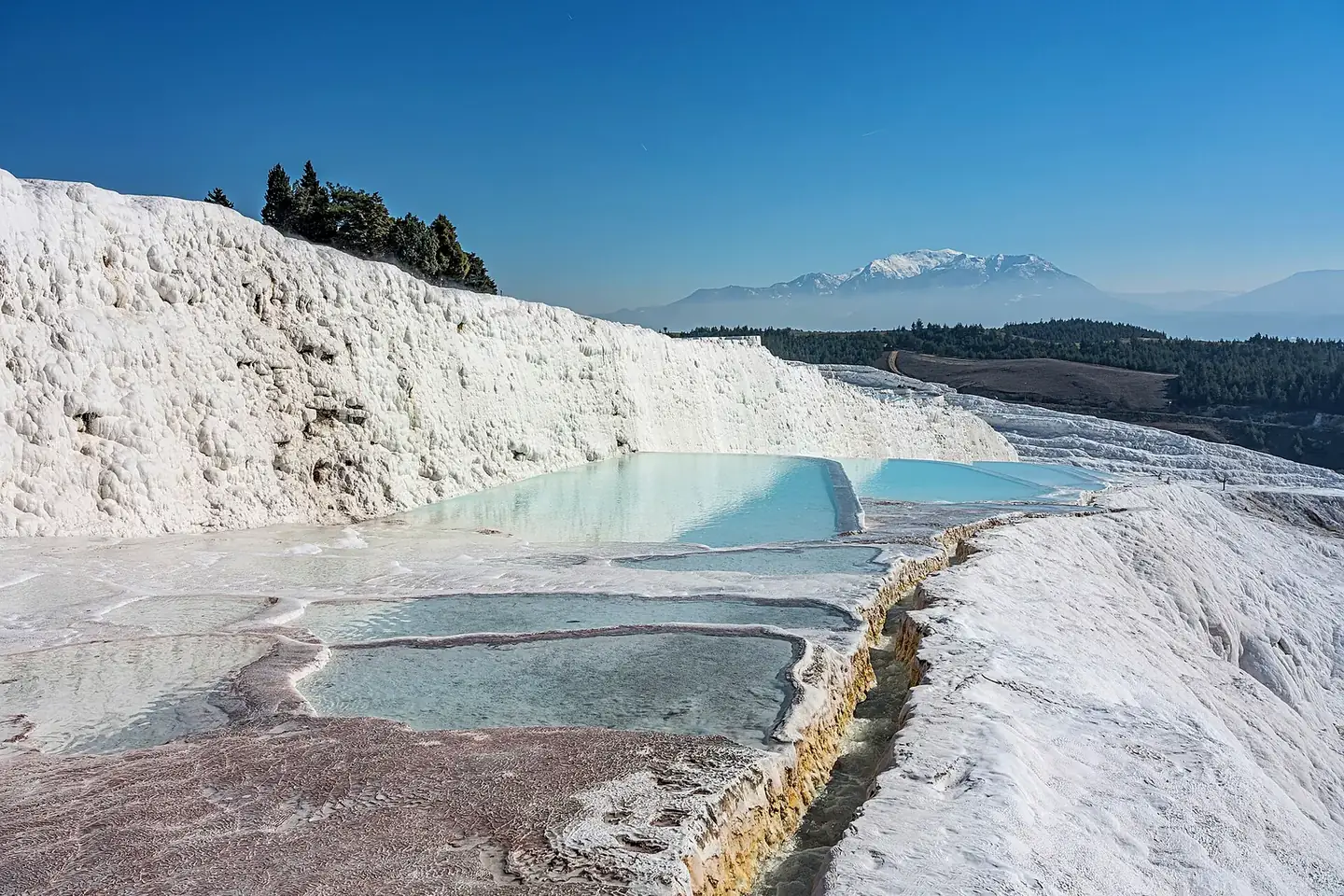
Pamukkale unites brilliant travertine terraces, thermal water and the extensive ancient spa city of Hierapolis.
Photo: A.Savin, FAL
Place overview
Understanding Pamukkale
Mineral-rich water created the white terraces that gave Pamukkale its name. Access is managed to protect them, and water flow or open sections can vary.
The archaeological landscape above the terraces is equally important. Hierapolis includes a theater, baths, temples, gates and a large necropolis.
At a glance
History and identity
How the place took shape
Hierapolis developed in the Hellenistic period and flourished under Roman and Byzantine rule as a thermal spa and religious center.
Earthquakes repeatedly damaged the city, while the springs continued to attract visitors. Pamukkale and Hierapolis are jointly protected as a UNESCO World Heritage Site.
Best time to visit
Choose the season around the experience
April to June and September to October work well for Istanbul, Cappadocia and the archaeological sites, with generally comfortable temperatures.
July and August suit the coast but can be hot and crowded inland. Winter brings a quieter Istanbul and possible snow in Cappadocia, along with shorter daylight hours.
Best things to do
Experiences and places worth your time
Use these ideas as a starting point, then adjust the order and depth to your interests, energy and available days.
01
Travertine terraces
Walk only in permitted areas and expect conditions to depend on water-management decisions.
02
Hierapolis theater
See one of the site’s strongest surviving monuments and its view across the valley.
03
Ancient necropolis
Explore a broad range of tomb types that reflect the city’s long spa history.
Make the visit work
Three decisions for a better stay in Pamukkale
Use the place as part of a complete route, not an isolated stop. Time, location and the way you visit can change the experience.
Allow a useful pace
The suggested starting point is half-day or one night. Adjust it for arrival time, walking, weather and how deeply you want to explore.
Connect the route
A practical pairing is Ephesus or the Aegean coast. Check the actual transfer and avoid using a valuable day only to collect another place name.
Plan around the character
Pamukkale is known for white travertines and hierapolis. Choose guides, accommodation and free time that help you experience that character clearly.
Protect some open time
Not every hour needs a reservation. A free evening, a slower meal or time to revisit an area can make the stay feel more personal and less mechanical.
Frequently asked
Before visiting Pamukkale
How much time should I consider?
Half-day or one night is a useful starting point, but arrival and departure hours matter. Add time if the place is central to the trip or if important visits depend on timed entry, weather or physical effort.
What is the best time to visit?
April to June and September to October work well for Istanbul, Cappadocia and the archaeological sites, with generally comfortable temperatures. Always check current weather and local operating conditions close to travel.
Do I need a private guide?
A guide is most valuable where history, access or local context would otherwise be difficult to understand. Independent time can still be kept for neighborhoods, meals and personal interests.
What should I tell the planning team?
Share your available days, activity level, hotel preferences, mobility needs and the experiences you consider essential. That information helps place Pamukkale correctly within the wider Turkey route.
Plan it well
A better way to include Pamukkale
Arrive early or stay locally to avoid the busiest middle hours. Bring sun protection and footwear that is easy to remove for permitted terrace sections.
Treat Pamukkale as both a natural and archaeological visit. Allow enough time above the terraces instead of planning only a short photo stop.