
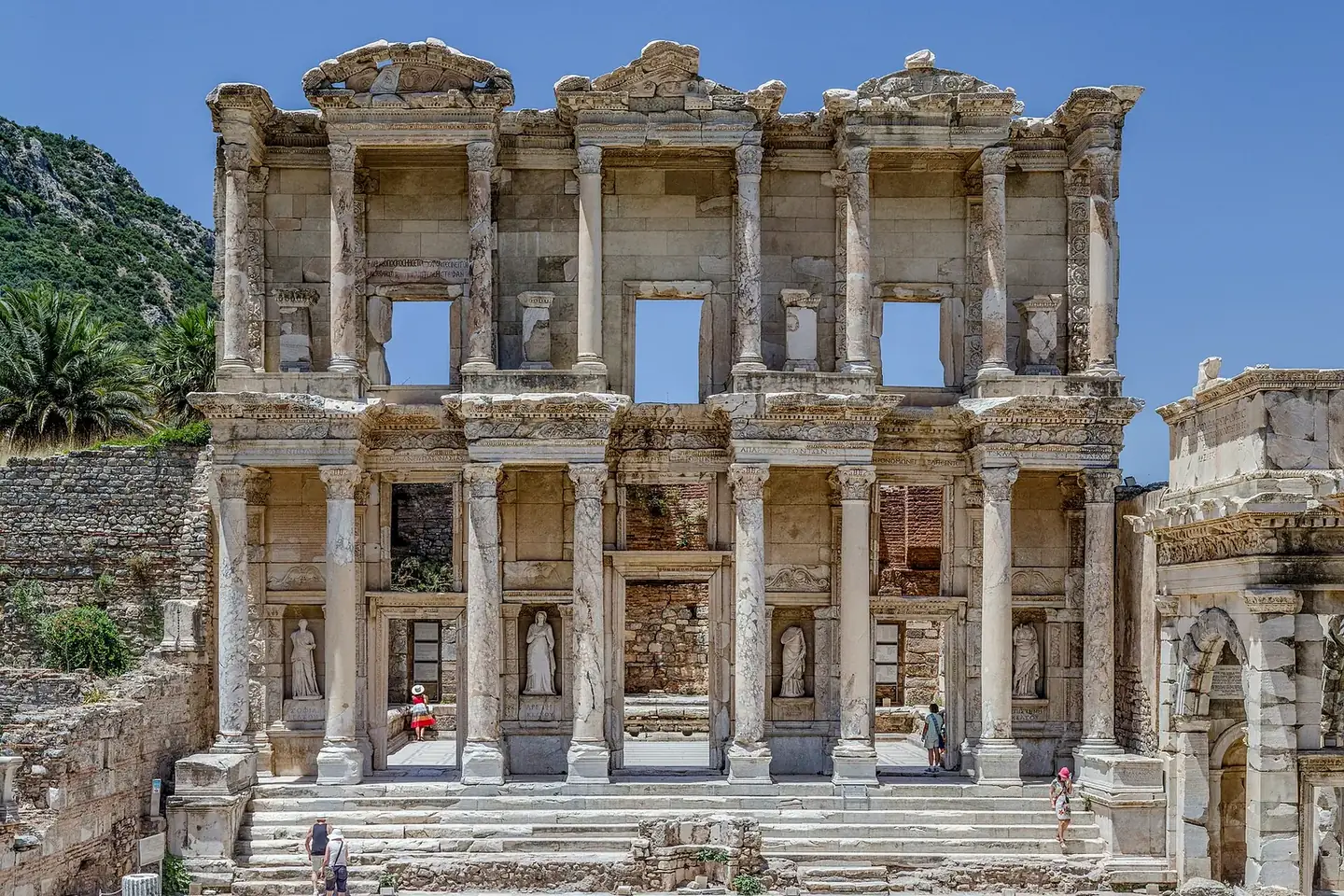
Ephesus
Ephesus is one of the Mediterranean’s most compelling ancient cities, with monumental streets, civic buildings and domestic spaces.
Photo: Benh LIEU SONG, CC BY-SA 3.0
Place overview
Understanding Ephesus
The archaeological site reveals a Roman-era city through the Library of Celsus, theaters, temples, baths and marble streets. The Terrace Houses add rare detail about elite urban life.
Nearby Selçuk provides further context through the Ephesus Museum, Basilica of St John and Temple of Artemis remains. Together they make a richer visit than the main ruins alone.
At a glance
History and identity
How the place took shape
Ephesus developed as a Greek city and later flourished under Roman rule as a major port and provincial capital. Silting gradually moved the coastline away and altered its economic role.
The city was important to early Christianity and is associated with Paul, John and traditions concerning Mary. Byzantine and later settlements continued around the area.
Best time to visit
Choose the season around the experience
April to June and September to October work well for Istanbul, Cappadocia and the archaeological sites, with generally comfortable temperatures.
July and August suit the coast but can be hot and crowded inland. Winter brings a quieter Istanbul and possible snow in Cappadocia, along with shorter daylight hours.
Best things to do
Experiences and places worth your time
Use these ideas as a starting point, then adjust the order and depth to your interests, energy and available days.
01
Main ancient city
Walk the upper and lower streets with historical context rather than treating the site as a photo stop.
02
Terrace Houses
Add the separately controlled residential complex when open for mosaics and wall paintings.
03
Selçuk heritage
Use the museum and nearby monuments to connect finds, religion and the city’s changing geography.
Make the visit work
Three decisions for a better stay in Ephesus
Use the place as part of a complete route, not an isolated stop. Time, location and the way you visit can change the experience.
Allow a useful pace
The suggested starting point is one full day. Adjust it for arrival time, walking, weather and how deeply you want to explore.
Connect the route
A practical pairing is İzmir, Bodrum or the Aegean coast. Check the actual transfer and avoid using a valuable day only to collect another place name.
Plan around the character
Ephesus is known for library of celsus and terrace houses. Choose guides, accommodation and free time that help you experience that character clearly.
Protect some open time
Not every hour needs a reservation. A free evening, a slower meal or time to revisit an area can make the stay feel more personal and less mechanical.
Frequently asked
Before visiting Ephesus
How much time should I consider?
One full day is a useful starting point, but arrival and departure hours matter. Add time if the place is central to the trip or if important visits depend on timed entry, weather or physical effort.
What is the best time to visit?
April to June and September to October work well for Istanbul, Cappadocia and the archaeological sites, with generally comfortable temperatures. Always check current weather and local operating conditions close to travel.
Do I need a private guide?
A guide is most valuable where history, access or local context would otherwise be difficult to understand. Independent time can still be kept for neighborhoods, meals and personal interests.
What should I tell the planning team?
Share your available days, activity level, hotel preferences, mobility needs and the experiences you consider essential. That information helps place Ephesus correctly within the wider Turkey route.
Plan it well
A better way to include Ephesus
Start early because shade is limited and cruise-ship groups can concentrate around the principal route. Wear shoes suitable for polished stone.
Confirm opening conditions for the Terrace Houses and museum, then plan the driving route around your next Aegean destination.