
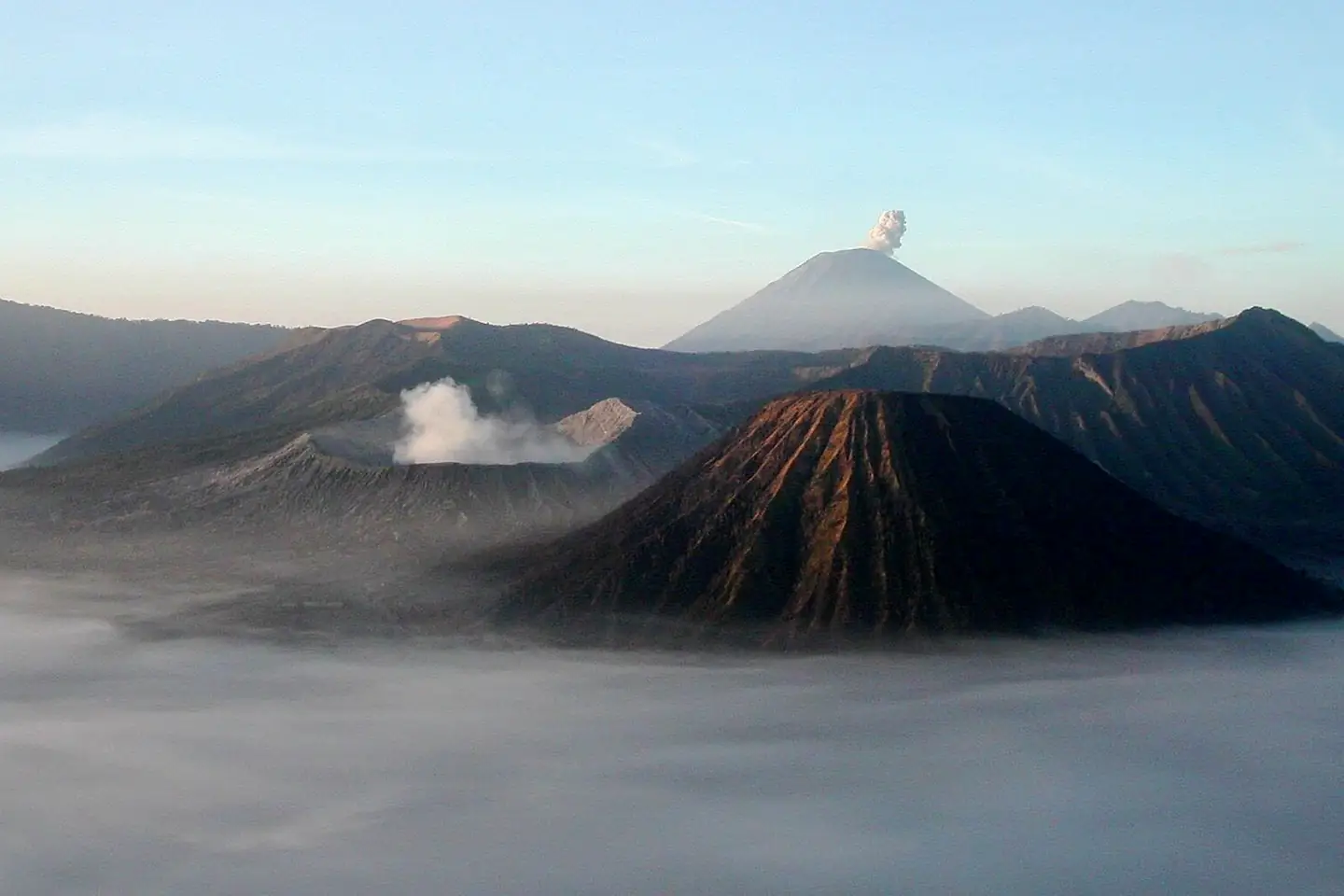
Java Volcanoes
Java’s volcanic belt creates remarkable scenery, fertile highlands and active hazards that require current local guidance.
Place overview
Understanding Java Volcanoes
Mount Bromo and the Ijen area are the most common additions to a Java route. Both involve early departures, road transfers and exposure to dust, cold or volcanic gases.
Access can change without notice. No summit or crater should be promised before checking official restrictions and conditions.
At a glance
History and identity
How the place took shape
Volcanic activity shaped Java’s soil, settlement and agriculture over long periods. Eruptions have also repeatedly displaced communities.
Several volcanoes remain active and are monitored by Indonesian authorities. Tourism operates alongside farming, mining and protected areas.
Best time to visit
Choose the season around the experience
May to September is generally drier, though volcanic access depends on real-time safety conditions rather than season alone.
July and August are busy in Bali. Shoulder months can offer a better balance, while sea crossings and volcano access always depend on local conditions.
Best things to do
Experiences and places worth your time
Use these ideas as a starting point, then adjust the order and depth to your interests, energy and available days.
01
Bromo viewpoints
Choose a less congested approach when conditions allow.
02
Caldera landscape
Explore with a licensed guide and suitable protection from dust.
03
Ijen region
Follow current gas, trail and access instructions without exception.
Make the visit work
Three decisions for a better stay in Java Volcanoes
Use the place as part of a complete route, not an isolated stop. Time, location and the way you visit can change the experience.
Allow a useful pace
The suggested starting point is two or three nights. Adjust it for arrival time, walking, weather and how deeply you want to explore.
Connect the route
A practical pairing is Yogyakarta or Bali. Check the actual transfer and avoid using a valuable day only to collect another place name.
Plan around the character
Java Volcanoes is known for bromo caldera and ijen. Choose guides, accommodation and free time that help you experience that character clearly.
Protect some open time
Not every hour needs a reservation. A free evening, a slower meal or time to revisit an area can make the stay feel more personal and less mechanical.
Frequently asked
Before visiting Java Volcanoes
How much time should I consider?
Two or three nights is a useful starting point, but arrival and departure hours matter. Add time if the place is central to the trip or if important visits depend on timed entry, weather or physical effort.
What is the best time to visit?
May to September is generally drier, though volcanic access depends on real-time safety conditions rather than season alone. Always check current weather and local operating conditions close to travel.
Do I need a private guide?
A guide is most valuable where history, access or local context would otherwise be difficult to understand. Independent time can still be kept for neighborhoods, meals and personal interests.
What should I tell the planning team?
Share your available days, activity level, hotel preferences, mobility needs and the experiences you consider essential. That information helps place Java Volcanoes correctly within the wider Indonesia route.
Plan it well
A better way to include Java Volcanoes
Use warm layers, proper footwear and respiratory protection where local authorities advise it.
Avoid unsafe or exploitative tours built around hazardous proximity to mining or volcanic gas.