
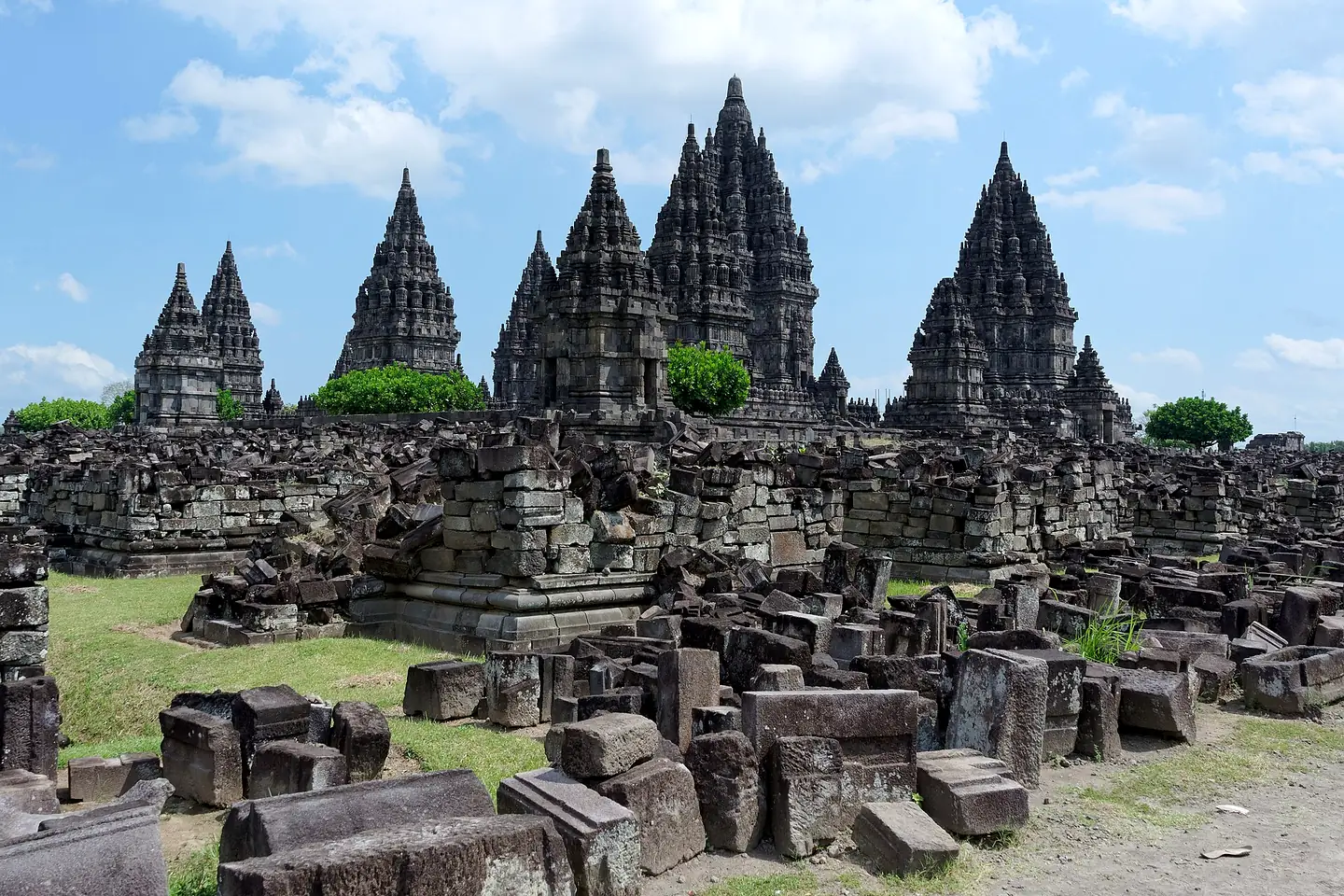
Yogyakarta and Borobudur
Central Java combines monumental Buddhist and Hindu sites with a living court city known for art, craft and food.
Photo: Jakub Hałun, CC BY-SA 4.0
Place overview
Understanding Yogyakarta and Borobudur
Yogyakarta is a useful base for Borobudur, Prambanan and urban cultural visits. Temple entry systems and sunrise arrangements can change, so current planning matters.
The city’s workshops, markets and performance traditions add depth beyond the headline monuments.
At a glance
History and identity
How the place took shape
Central Java supported powerful Hindu-Buddhist kingdoms that built Borobudur and the Prambanan complex between the eighth and tenth centuries.
Yogyakarta later became a center of Javanese court culture and played an important role during Indonesia’s independence period.
Best time to visit
Choose the season around the experience
May to September is generally drier. Major holidays can change crowd levels and transport.
July and August are busy in Bali. Shoulder months can offer a better balance, while sea crossings and volcano access always depend on local conditions.
Best things to do
Experiences and places worth your time
Use these ideas as a starting point, then adjust the order and depth to your interests, energy and available days.
01
Borobudur
Visit under the current conservation and timed-entry rules.
02
Prambanan
Allow time for the main compound and its historical setting.
03
Yogyakarta arts
Choose a focused visit to batik, music, dance or contemporary studios.
Make the visit work
Three decisions for a better stay in Yogyakarta and Borobudur
Use the place as part of a complete route, not an isolated stop. Time, location and the way you visit can change the experience.
Allow a useful pace
The suggested starting point is three nights. Adjust it for arrival time, walking, weather and how deeply you want to explore.
Connect the route
A practical pairing is Bali or east Java. Check the actual transfer and avoid using a valuable day only to collect another place name.
Plan around the character
Yogyakarta and Borobudur is known for borobudur, prambanan and javanese arts. Choose guides, accommodation and free time that help you experience that character clearly.
Protect some open time
Not every hour needs a reservation. A free evening, a slower meal or time to revisit an area can make the stay feel more personal and less mechanical.
Frequently asked
Before visiting Yogyakarta and Borobudur
How much time should I consider?
Three nights is a useful starting point, but arrival and departure hours matter. Add time if the place is central to the trip or if important visits depend on timed entry, weather or physical effort.
What is the best time to visit?
May to September is generally drier. Major holidays can change crowd levels and transport. Always check current weather and local operating conditions close to travel.
Do I need a private guide?
A guide is most valuable where history, access or local context would otherwise be difficult to understand. Independent time can still be kept for neighborhoods, meals and personal interests.
What should I tell the planning team?
Share your available days, activity level, hotel preferences, mobility needs and the experiences you consider essential. That information helps place Yogyakarta and Borobudur correctly within the wider Indonesia route.
Plan it well
A better way to include Yogyakarta and Borobudur
Confirm which temple levels and sunrise viewpoints are open before promising a specific experience.
Use a specialist guide for the monuments and a different local focus for the city itself.