
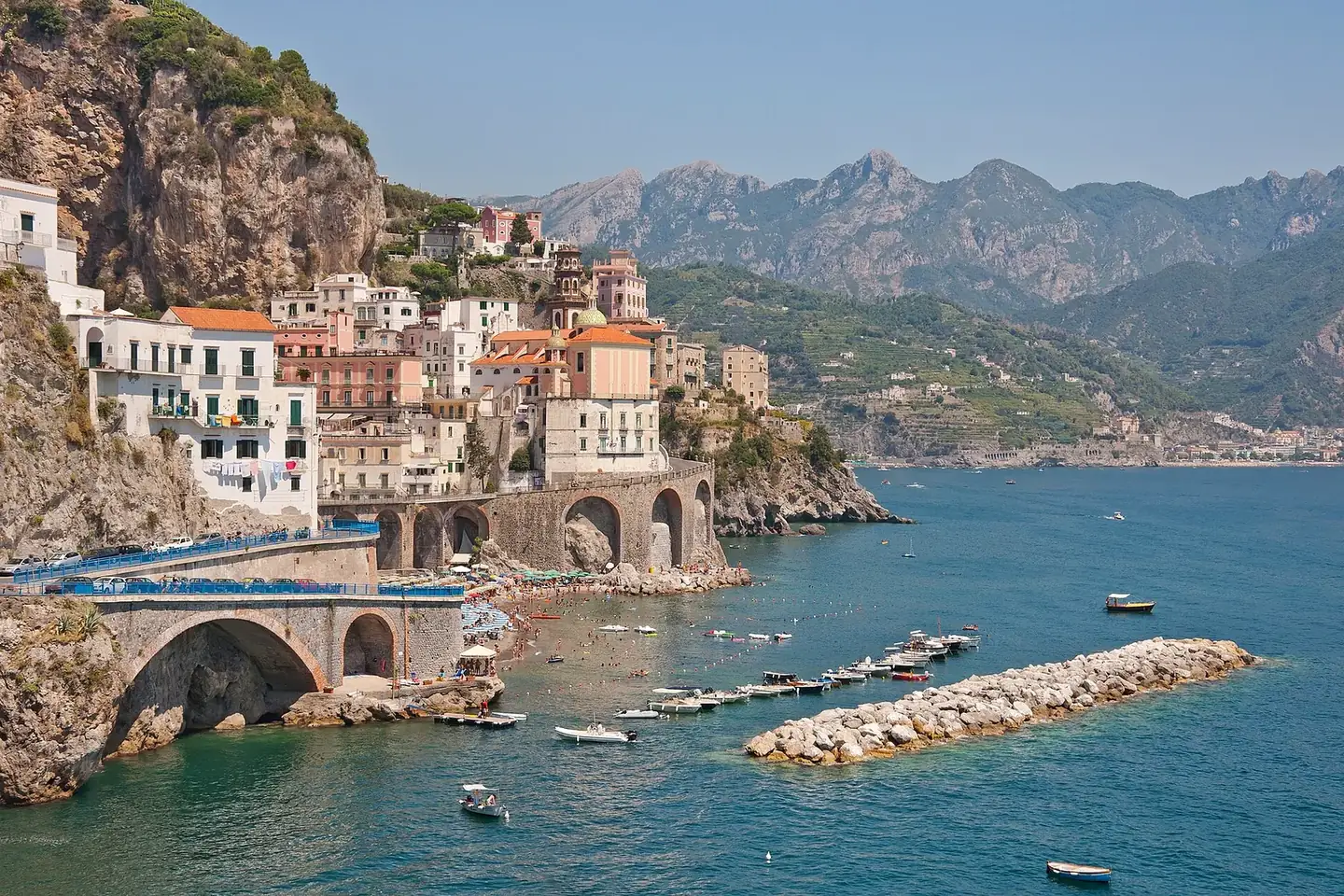
Amalfi Coast
The Amalfi Coast combines cliffside towns, sea journeys, historic paths and refined hotels along a dramatic but logistically demanding shoreline.
Photo: Paolo Costa Baldi, CC BY 3.0
Place overview
Understanding Amalfi Coast
Positano, Amalfi and Ravello offer different experiences: beachside energy, maritime history and elevated gardens. The best base depends on mobility, nightlife, views and onward plans.
Road traffic and seasonal crowds can be intense. Boats, private drivers and well-timed walks should be combined rather than relying on one transport method.
At a glance
History and identity
How the place took shape
Amalfi was a major medieval maritime republic with trading links across the Mediterranean. Towns adapted to steep terrain through terraces, stairways and compact coastal settlements.
Grand Tour visitors and later artists helped shape the coast’s international reputation. Its cultural landscape is now recognized as a UNESCO World Heritage Site.
Best time to visit
Choose the season around the experience
April to June and September to October usually offer a good balance of weather and daylight for cities and countryside.
July and August are hot and busy in many famous places. Winter can be rewarding in the major art cities, while many coastal services operate on a reduced schedule.
Best things to do
Experiences and places worth your time
Use these ideas as a starting point, then adjust the order and depth to your interests, energy and available days.
01
Coastal towns
Choose the right base and visit neighboring towns at times that avoid the heaviest day traffic.
02
Private boat day
See the coastline from the water with a route adapted to sea conditions and your interests.
03
Ravello and walking paths
Balance the waterfront with gardens, historic villas and selected paths above the coast.
Make the visit work
Three decisions for a better stay in Amalfi Coast
Use the place as part of a complete route, not an isolated stop. Time, location and the way you visit can change the experience.
Allow a useful pace
The suggested starting point is three or four nights. Adjust it for arrival time, walking, weather and how deeply you want to explore.
Connect the route
A practical pairing is Naples, Pompeii or Capri. Check the actual transfer and avoid using a valuable day only to collect another place name.
Plan around the character
Amalfi Coast is known for historic towns, views and sea access. Choose guides, accommodation and free time that help you experience that character clearly.
Protect some open time
Not every hour needs a reservation. A free evening, a slower meal or time to revisit an area can make the stay feel more personal and less mechanical.
Frequently asked
Before visiting Amalfi Coast
How much time should I consider?
Three or four nights is a useful starting point, but arrival and departure hours matter. Add time if the place is central to the trip or if important visits depend on timed entry, weather or physical effort.
What is the best time to visit?
April to June and September to October usually offer a good balance of weather and daylight for cities and countryside. Always check current weather and local operating conditions close to travel.
Do I need a private guide?
A guide is most valuable where history, access or local context would otherwise be difficult to understand. Independent time can still be kept for neighborhoods, meals and personal interests.
What should I tell the planning team?
Share your available days, activity level, hotel preferences, mobility needs and the experiences you consider essential. That information helps place Amalfi Coast correctly within the wider Italy route.
Plan it well
A better way to include Amalfi Coast
Many hotels and streets involve stairs. Confirm lift access, luggage handling and the walking route before selecting a room.
Avoid tight same-day flight or rail connections during peak season. Road delays and weather-related boat changes require margin.