
Wadi Rum
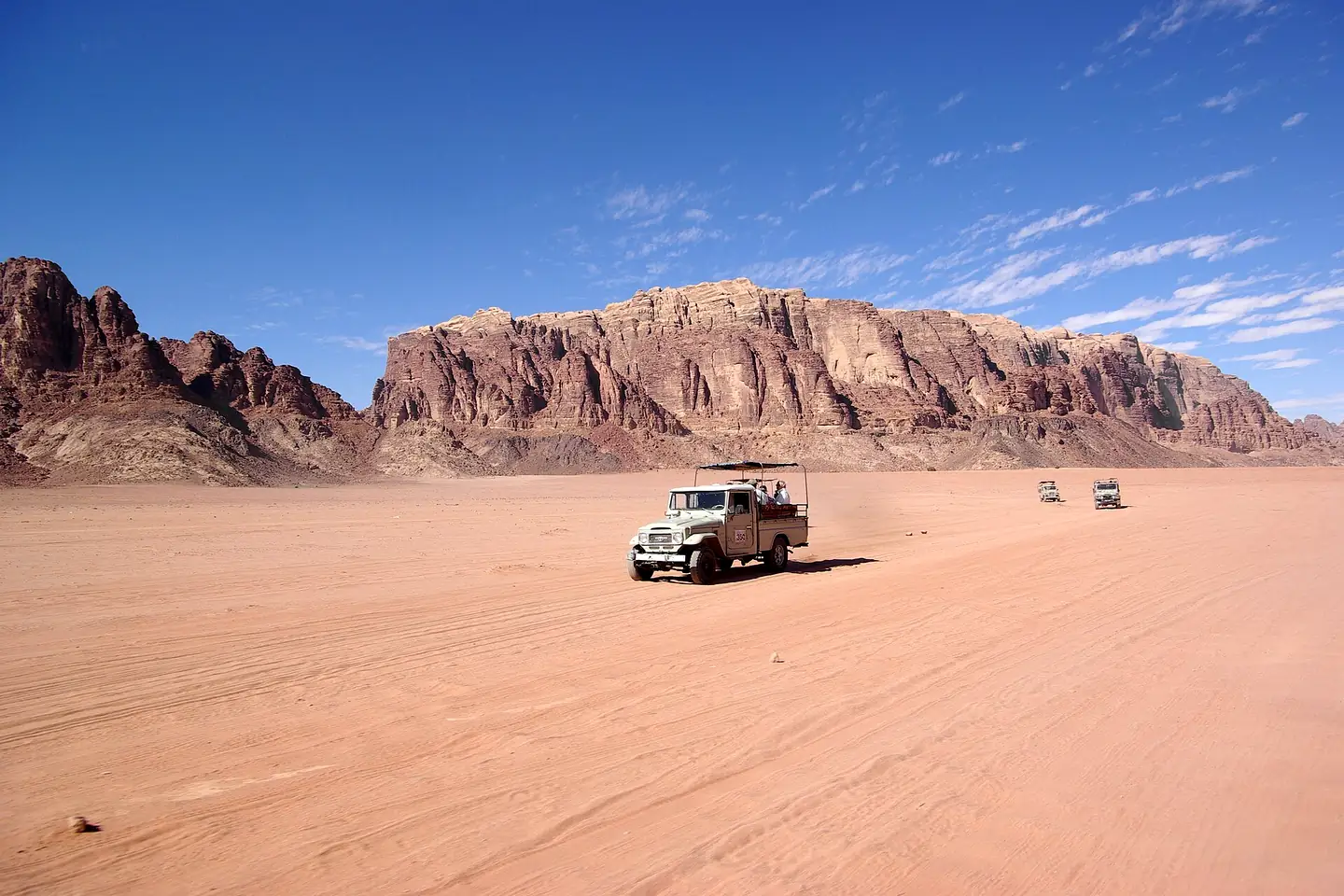
Wadi Rum is a protected desert landscape of sandstone mountains, broad valleys and long Bedouin cultural history.
Place overview
Understanding Wadi Rum
The experience depends on the local guide, route and camp location. A private jeep journey can reach quieter valleys and explain geology, inscriptions and Bedouin use of the landscape.
An overnight stay adds sunset, dinner and early desert light, but camp standards and atmosphere vary widely and should be selected carefully.
At a glance
History and identity
How the place took shape
People have moved through Wadi Rum for thousands of years, leaving petroglyphs and inscriptions. Nabataean remains reflect the desert’s connection to wider trade networks.
Bedouin communities developed detailed knowledge of water, routes and seasonal conditions. That living relationship with the desert is as important as its modern film associations.
Best time to visit
Choose the season around the experience
March to May and September to November usually offer the best balance for archaeology, walking and desert travel.
Summer can be very hot at Petra and the Dead Sea. Winter is quieter, but nights in the highlands and Wadi Rum can be cold and occasional rain can affect walking routes.
Best things to do
Experiences and places worth your time
Use these ideas as a starting point, then adjust the order and depth to your interests, energy and available days.
01
Private desert route
Travel beyond the nearest stops with a local guide who can adapt the route to time and conditions.
02
Sunset and night sky
Choose a quiet viewpoint and allow the evening to unfold without over-programming it.
03
Bedouin context
Learn about local history, food and desert knowledge through respectful community-led experiences.
Make the visit work
Three decisions for a better stay in Wadi Rum
Use the place as part of a complete route, not an isolated stop. Time, location and the way you visit can change the experience.
Allow a useful pace
The suggested starting point is one afternoon and overnight. Adjust it for arrival time, walking, weather and how deeply you want to explore.
Connect the route
A practical pairing is Petra and Aqaba. Check the actual transfer and avoid using a valuable day only to collect another place name.
Plan around the character
Wadi Rum is known for sandstone valleys and bedouin culture. Choose guides, accommodation and free time that help you experience that character clearly.
Protect some open time
Not every hour needs a reservation. A free evening, a slower meal or time to revisit an area can make the stay feel more personal and less mechanical.
Frequently asked
Before visiting Wadi Rum
How much time should I consider?
One afternoon and overnight is a useful starting point, but arrival and departure hours matter. Add time if the place is central to the trip or if important visits depend on timed entry, weather or physical effort.
What is the best time to visit?
March to May and September to November usually offer the best balance for archaeology, walking and desert travel. Always check current weather and local operating conditions close to travel.
Do I need a private guide?
A guide is most valuable where history, access or local context would otherwise be difficult to understand. Independent time can still be kept for neighborhoods, meals and personal interests.
What should I tell the planning team?
Share your available days, activity level, hotel preferences, mobility needs and the experiences you consider essential. That information helps place Wadi Rum correctly within the wider Jordan route.
Plan it well
A better way to include Wadi Rum
Ask for the actual camp name and location before confirming. “Luxury camp” is a broad label and does not guarantee the same privacy or comfort.
Desert temperatures change quickly. Pack for cold evenings outside summer and discuss accessibility if vehicle transfers or walking are limited.