
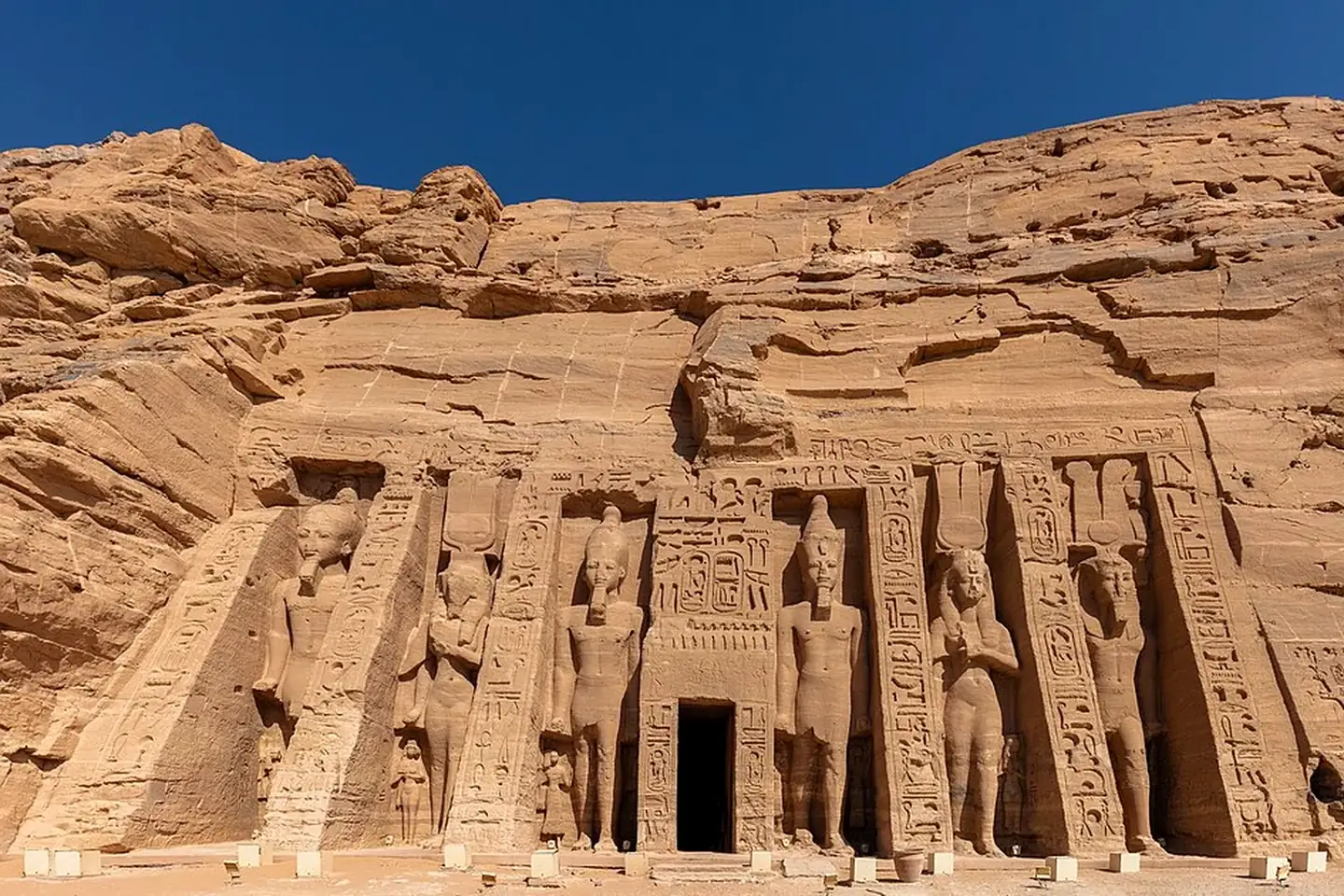
Aswan and Abu Simbel
Aswan offers a slower Nile landscape, Nubian heritage and access to the monumental temples of Abu Simbel.
Photo: Diego Delso, CC BY-SA 4.0
Place overview
Understanding Aswan and Abu Simbel
Aswan is calmer than Cairo and Luxor. Islands, granite quarries, riverside views and Nubian culture make it a useful pause at the southern end of a Nile itinerary.
Abu Simbel is a separate excursion requiring an early road journey or flight. Its scale and relocation history make it one of southern Egypt’s defining visits.
At a glance
History and identity
How the place took shape
Ancient Aswan stood near Egypt’s southern frontier and controlled trade routes into Nubia. Granite from the region supplied major monuments across the country.
Ramesses II built the temples at Abu Simbel in the 13th century BCE. An international campaign moved them in the 1960s to protect them from the waters created by the Aswan High Dam.
Best time to visit
Choose the season around the experience
October to April is the most comfortable period for Cairo, Luxor and Aswan. Days are generally milder, although December and January are also the busiest months.
May and September can work with early starts. Summer heat is intense in Upper Egypt, so the daily schedule needs more shade, rest and realistic transfer times.
Best things to do
Experiences and places worth your time
Use these ideas as a starting point, then adjust the order and depth to your interests, energy and available days.
01
Abu Simbel
See the rock-cut temples of Ramesses II and Nefertari and learn how they were relocated.
02
Aswan’s Nile islands
Experience the river at a slower pace by boat, with weather and water conditions considered.
03
Nubian context
Include respectful cultural experiences that explain the region beyond its ancient monuments.
Make the visit work
Three decisions for a better stay in Aswan and Abu Simbel
Use the place as part of a complete route, not an isolated stop. Time, location and the way you visit can change the experience.
Allow a useful pace
The suggested starting point is two or three nights. Adjust it for arrival time, walking, weather and how deeply you want to explore.
Connect the route
A practical pairing is Luxor and a Nile cruise. Check the actual transfer and avoid using a valuable day only to collect another place name.
Plan around the character
Aswan and Abu Simbel is known for nubian heritage and abu simbel. Choose guides, accommodation and free time that help you experience that character clearly.
Protect some open time
Not every hour needs a reservation. A free evening, a slower meal or time to revisit an area can make the stay feel more personal and less mechanical.
Frequently asked
Before visiting Aswan and Abu Simbel
How much time should I consider?
Two or three nights is a useful starting point, but arrival and departure hours matter. Add time if the place is central to the trip or if important visits depend on timed entry, weather or physical effort.
What is the best time to visit?
October to April is the most comfortable period for Cairo, Luxor and Aswan. Days are generally milder, although December and January are also the busiest months. Always check current weather and local operating conditions close to travel.
Do I need a private guide?
A guide is most valuable where history, access or local context would otherwise be difficult to understand. Independent time can still be kept for neighborhoods, meals and personal interests.
What should I tell the planning team?
Share your available days, activity level, hotel preferences, mobility needs and the experiences you consider essential. That information helps place Aswan and Abu Simbel correctly within the wider Egypt route.
Plan it well
A better way to include Aswan and Abu Simbel
Decide early whether Abu Simbel will be reached by road or air. The choice affects departure time, comfort and the rest of the day.
Keep Aswan from becoming only a transit point. A quiet river period helps balance the more intensive archaeological days.