
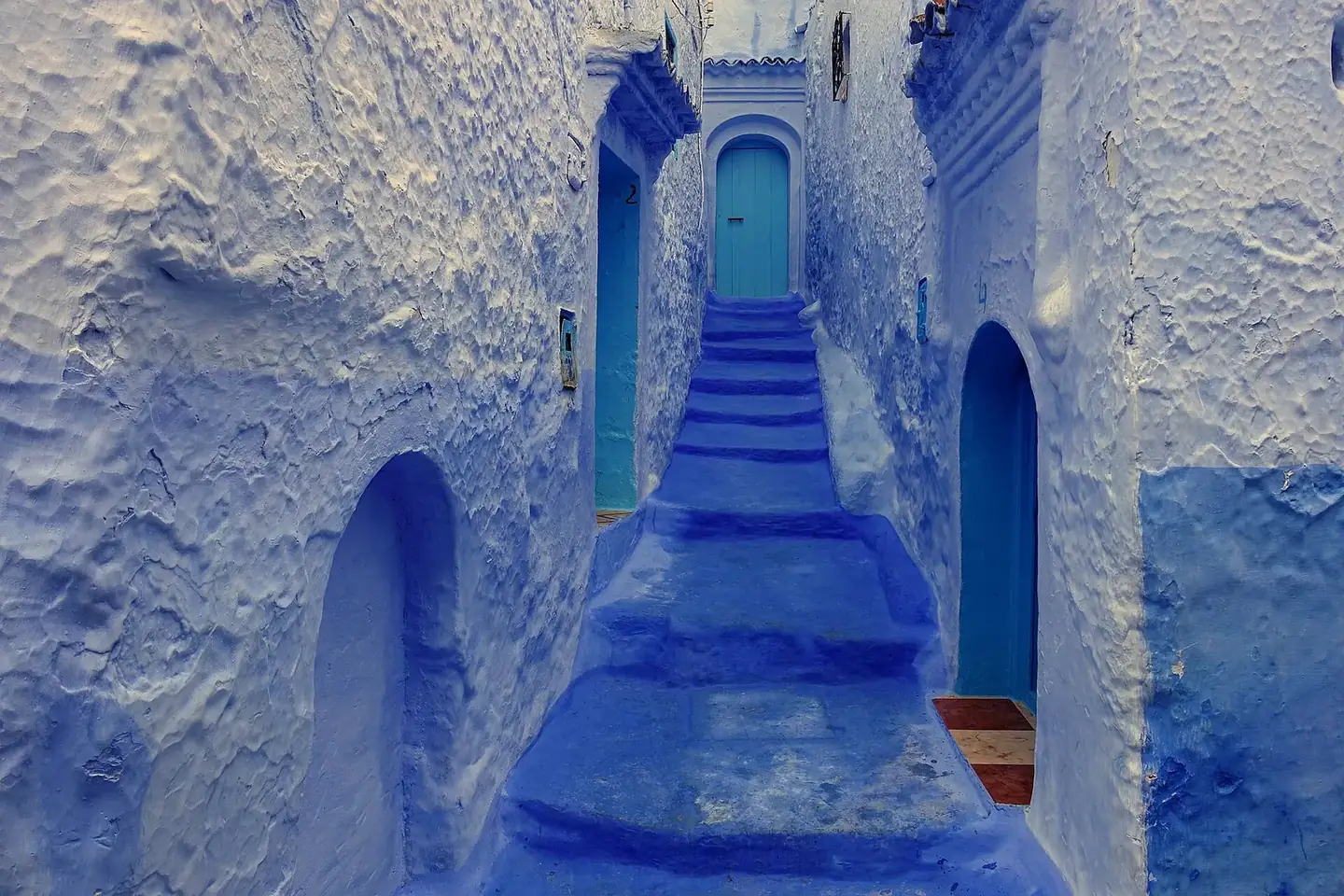
Chefchaouen
Chefchaouen is a compact Rif Mountain town known for its blue-washed medina, relaxed pace and northern Moroccan identity.
Photo: Fbrandao.1963, CC BY-SA 4.0
Place overview
Understanding Chefchaouen
The town is smaller and quieter than Morocco’s imperial cities. Its appeal comes from walking, mountain views, local food and the changing light across its blue and white streets.
Chefchaouen works best as part of a northern route or as a slower stop between Tangier and Fes, rather than as a rushed same-day excursion.
At a glance
History and identity
How the place took shape
Chefchaouen was founded in the late 15th century as a fortified settlement. Muslim and Jewish families displaced from Iberia contributed to its architecture, crafts and Andalusian character.
The town later formed part of the Spanish protectorate in northern Morocco. Its mountain setting and distinctive medina have since made it one of the country’s best-known small destinations.
Best time to visit
Choose the season around the experience
Spring and autumn suit most cultural routes. March to May and September to November usually bring comfortable days in the cities, mountains and desert approaches.
Summer works well on the Atlantic coast but can be very hot inland. Winter is pleasant in Marrakech and the south, with cold nights in the mountains and desert.
Best things to do
Experiences and places worth your time
Use these ideas as a starting point, then adjust the order and depth to your interests, energy and available days.
01
The medina
Walk beyond the busiest lanes to find neighborhood ovens, workshops and quieter residential streets.
02
Kasbah and square
Use the central kasbah and Outa el-Hammam as an introduction to the town’s scale and history.
03
Rif Mountain views
Take a short guided walk or visit a viewpoint when the light and weather are suitable.
Make the visit work
Three decisions for a better stay in Chefchaouen
Use the place as part of a complete route, not an isolated stop. Time, location and the way you visit can change the experience.
Allow a useful pace
The suggested starting point is two nights. Adjust it for arrival time, walking, weather and how deeply you want to explore.
Connect the route
A practical pairing is Tangier and Fes. Check the actual transfer and avoid using a valuable day only to collect another place name.
Plan around the character
Chefchaouen is known for blue medina and rif views. Choose guides, accommodation and free time that help you experience that character clearly.
Protect some open time
Not every hour needs a reservation. A free evening, a slower meal or time to revisit an area can make the stay feel more personal and less mechanical.
Frequently asked
Before visiting Chefchaouen
How much time should I consider?
Two nights is a useful starting point, but arrival and departure hours matter. Add time if the place is central to the trip or if important visits depend on timed entry, weather or physical effort.
What is the best time to visit?
Spring and autumn suit most cultural routes. March to May and September to November usually bring comfortable days in the cities, mountains and desert approaches. Always check current weather and local operating conditions close to travel.
Do I need a private guide?
A guide is most valuable where history, access or local context would otherwise be difficult to understand. Independent time can still be kept for neighborhoods, meals and personal interests.
What should I tell the planning team?
Share your available days, activity level, hotel preferences, mobility needs and the experiences you consider essential. That information helps place Chefchaouen correctly within the wider Morocco route.
Plan it well
A better way to include Chefchaouen
An overnight stay gives you early morning and evening hours after many day visitors have left. This changes the feeling of the medina considerably.
The town includes slopes and steps. Select accommodation carefully if easy vehicle access or limited walking is important.